by Josie Fraser, Researcher & Writer for the Highland Good Food Partnership
More people are looking to local producers for their weekly shop as awareness of environmental issues and the importance of supporting local economies increase. But there are a few hurdles keeping some people from making the switch. One of these is the initial search to find who is producing food in your area and another is the time it can take to go to each of these producers for the different things you need: one stop for eggs, one for veggies… you get the idea.
What if there was a simple solution that tackled each of these? Well, I’ve done some research and I think online markets could be the answer. To learn more about online markets, I spoke with Helen from The Green Bowl, a local food hub based in Elphin, NW Highlands, and Nick Weir from the Open Food Network (OFN), an online selling platform.
Firstly, a quick introduction to The Green Bowl
The Green Bowl was set up by neighbours Helen and Tessa to sell food produced in Elphin, Knockan and Ledmore. As well as selling their own produce including a variety of meat, eggs, bread and other baked goods, they also sell soft fruit and veg and herbs from other producers in the area. Prior to March, The Green Bowl sold their produce from a food shop set up in the Elphin Tearooms, however, when COVID-19 hit, they, like many others, had to shut shop. The Green Bowl needed to find a new way to sell their food and after some research, decided to sell online through the OFN.
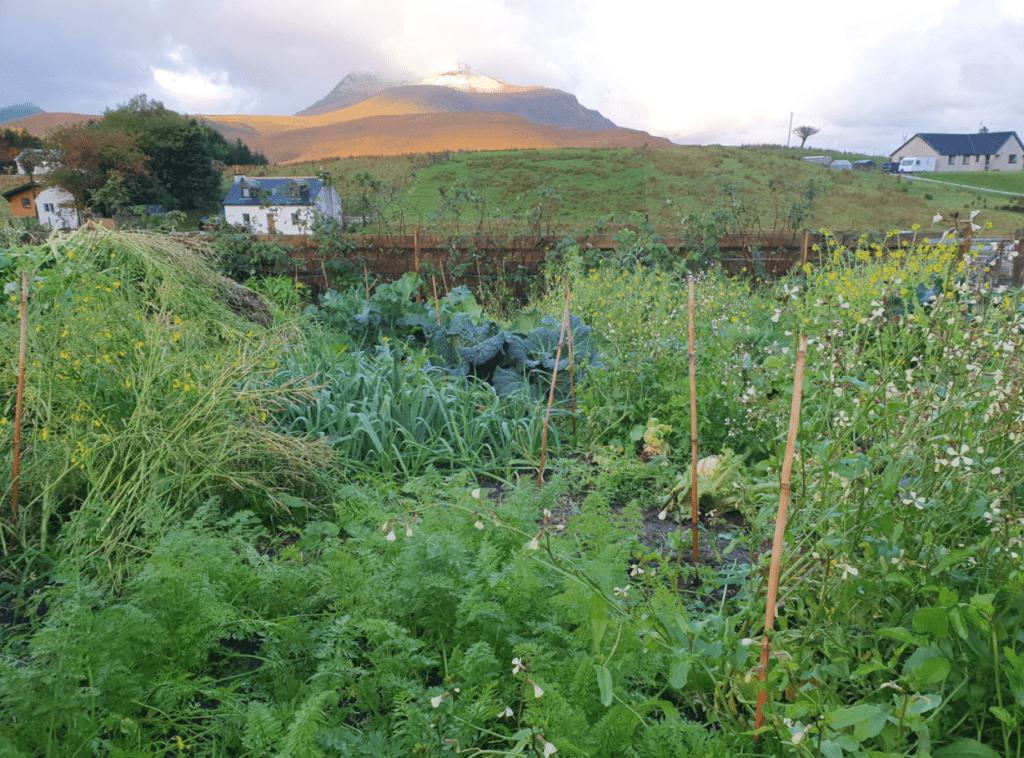
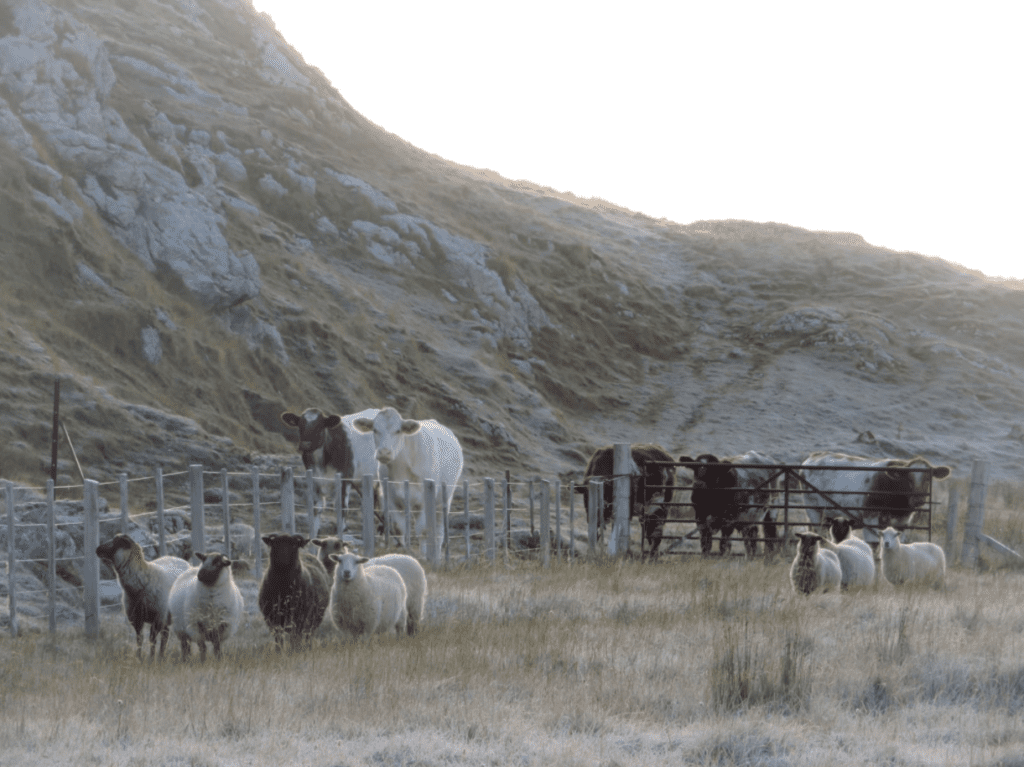
What you might see around you on a trip to Elphin.
What is the Open Food Network UK?
The OFN is a non profit organisation founded in Australia in 2012. It launched in the UK in 2015 when a group of producers and community projects sought to advertise and sell through an online platform that could connect them all. The group chose the OFN because of the platform’s simplicity and its aims and values. The OFN wants to build a food system that is fairer, more resilient, sustainable and based on a meaningful relationship between producers and consumers. So, it’s easy to understand why it is the first choice for so many producers and consumers.
How does the platform work for a food hub like The Green Bowl?
“Each producer is responsible for their own produce, and the customers can see who they are buying from. It’s kind of like an online farmers market and each supplier sets their own prices.” Helen explains. Producers or groups also decide their own order cycles, payment methods and distribution whilst the OFN does stuff like stock control, keeps track of orders and provides reports. The Green Bowl, like other food hubs online, deliver their produce to villages and towns nearby as well as offering a click-and-collect option.
What are the benefits of selling online and more specifically, through the OFN?
Helen told me how the platform makes the lives of producers simpler: “The admin and management sides of our business are much easier. We used to advertise on Facebook, where we had to sort through a lot of enquiries and orders. It was not efficient, time consuming and just not great for us or the customers. Now, we simply put up for sale what is available, and the OFN does the rest. It also gives us a structure and routine for ordering and delivering which we would’ve struggled to maintain on our own.”
Selling online also gives access to a wider audience. “We can share our customer bases – customers who have regularly bought beef from Tessa are now also seeing my mutton and our other producers’ vegetables” Helen explains. She adds, “Selling online and doing deliveries allows us to sell to Ullapool (a much bigger village, 14 miles away). If we weren’t selling online then Ullapool people would all have to drive out to us and we would be dependent on people coming to or through Elphin, which can be erratic.”
By delivering weekly to neighbouring villages, this reduces mileage and therefore emissions, compared to many different people travelling to their local producer throughout the week, so there is an added bonus of helping the environment too!
For the consumers, a huge benefit right now is that people who might want to avoid crowds during the pandemic can still shop for local produce from the safety of their home. In general, it gives consumers easier access to local food. Helen explains to me, “It’s amazing how many people want to buy locally but simply don’t know who to contact to get things, or are not comfortable contacting a stranger or showing up at your door to buy produce. Having the online platform has made it much easier for a wide range of people to buy from us. It is also easier for our customers as they have an automated shop which lists all the products and prices and keeps track of stock and orders”. Having food delivered also makes life easier, especially when living in the Highlands where local producers might actually be far away from home.
 What you can expect in a summer delivery!
Too good to be true?
Like most things, there are some challenges to switching online, but these aren’t impossible to overcome.
Helen told me that one of the bigger challenges they face as producers selling online is predicting what stock will be available for delivery day. “We had loads of strawberries this year, but didn’t sell any of them because we couldn’t predict far enough in advance how many we would have by delivery day!” However, she explained that it is a learning process and that, “Working with other growers means we can share knowledge and learn about how to predict and manage these things. Also, if there are lots of us growing, there is a chance another grower could step in with some produce if things don’t ripen as expected (or are damaged by caterpillars, slugs, birds, mice… you name it!).”
Using software can be a challenge for both consumers and producers. Some consumers don’t have access to the internet, or are uncomfortable with online shopping. However, The Green Bowl have managed to cater for most of them by communicating with them offline while the OFN offers ‘phone buddy’ volunteers to help those without internet to order. Nick from the OFN also sees a similar barrier for producers who “aren’t good with computers”. The OFN is solving this by offering a lot of training to get producers up to speed with IT education. The OFN also has volunteers on hand to act as the ‘middle person’, working the online part whilst the producers still make all the decisions.
Perhaps the biggest challenge for local producers selling both online and physically is the power of supermarket chains. Nick explains, “When lockdown restrictions were lifted, the number of people using the OFN rapidly decreased. The activity on the network had increased 850% during the first COVID-19 lockdown after the supermarkets showed their fragility with empty shelves and the idea of food resilience came into peoples minds. However, supermarkets pulled customers back with their reduced prices.”
The OFN started to fight back by using funding to educate producers on how to increase customer loyalty. They are also increasing customer awareness of the importance of supporting the local economy and protecting the planet through their consumer habits. These efforts are paying off – the OFN activity has again increased, showing that people are understanding the power they have to make positive change.
Nick also explained that another difficulty the OFN and local producers in general face is that big supermarket chains have more government support than other actors in the food system. Helen agreed and told me: “We need to keep fighting for changes to legislation and support systems like subsidies and grant funding that will make local food easier to produce, supply and buy in the Highlands.”
Are you sold by the idea of online markets?
Buying and selling produce online is a relatively new thing to many of us and although it has some challenges, there are huge benefits to producers, consumers and the environment. With the support from consumers choosing to source environmentally-friendly, local food and some support from the Government, we could really start to see a big improvement in our food systems here in the Highlands.
As always, I asked both Helen and Nick our favourite question: What is your vision for a better food system?
Helen’s response: “I’d love to see more of our land used to grow food for us to eat and for everybody in the Highlands to be able to find and afford local food to buy while maintaining our animal welfare, native species biodiversity and low carbon footprint, obviously! I’d love to see hundreds of small family businesses producing food and making a living from local food here in the Highlands. This could revitalise local communities and improve Scotland’s food security.
Nick’s response: “I would love to see more growing on a permaculture scale, less monoculture, more community supported agriculture, forest schools to get children outside and involved in growing and to see food poverty tackled with more work like that of The Long Table Project. I would love to see a stronger connection and cohesion, for example between producers which could mean things such as farmers organising the equivalent of car-shares for deliveries therefore reducing miles and emissions.”
To find a local producer near you, search on the OFN map here.
To read more about The Green Bowl, follow this link to their Facebook page.